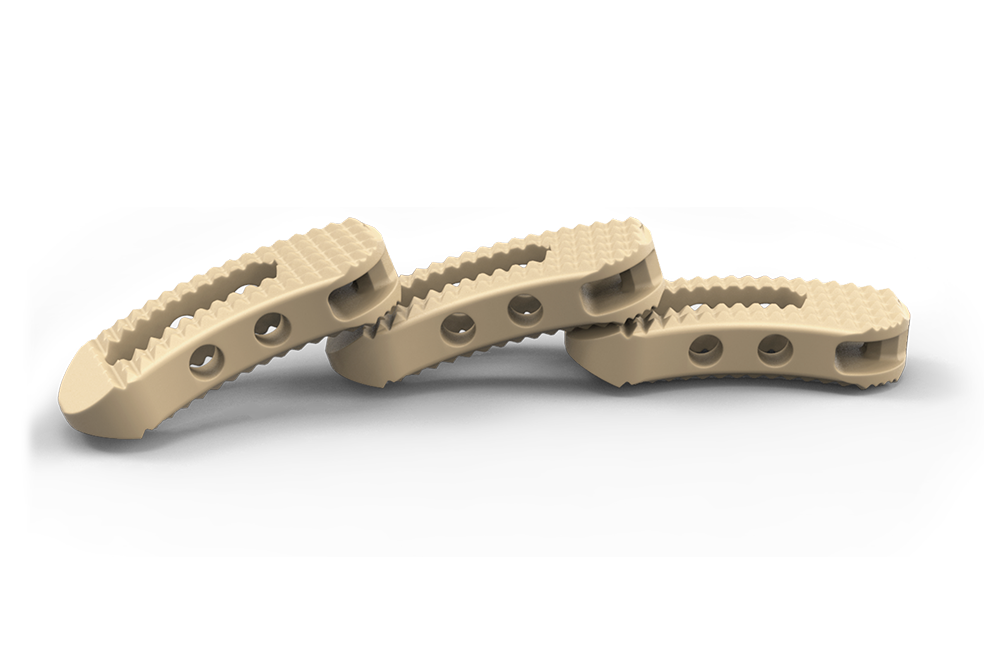
Radical Pedicle Screw System
SYSTEM OVERVIEW
Introduction to the Radical™ Pedicle screw including its design features with design logic follows.
The Radical™ Pedicle Screw design refers mainly to the Global problem of post-operative Pedicle Screw Loosening. Whilst there exists many papers dealing with the loosening problem, we have referenced an interesting article, including a report in the JBJS by a group of Bio-Engineers.
- Volume: 9 issue: 1, page(s): 55-61
Article first published online: May 24, 2018; Issue published: February 1, 2019 ref
Andrey Bokov, PhD1, Anatoliy Bulkin1, Alexander Aleynik, PhD1, Marina Kutlaeva1, Sergey Mlyavykh, PhD1
1Privolzhskiy Research Medical University, Nizhny Novgorod, Russia reports 27% to 50% post-op loosening.
- Pedicle screw loosening: the value of radiological imagings and the identification of risk factors assessed by extraction torque during screw removal surgery
Xiaoliang Wu, Jiawei Shi, Jinyan Wu, Yongquan Cheng, Kaiwen Peng, Jianting Chen & Hui Jiang – Journal of Orthopaedic Surgery and Research volume 14, Article number: 6 (2019) Cite this article
Reports a study of 64 patients, 35 (54,69%) showed radiographic signs of screw loosening.
The RADICAL™ Pedicle Screw is designed to create rigid bone fusion (arthrodesis) between vertebral segments in the lower thoracic vertebrae. It is primarily designed to address the following problems:
Primary surgery:
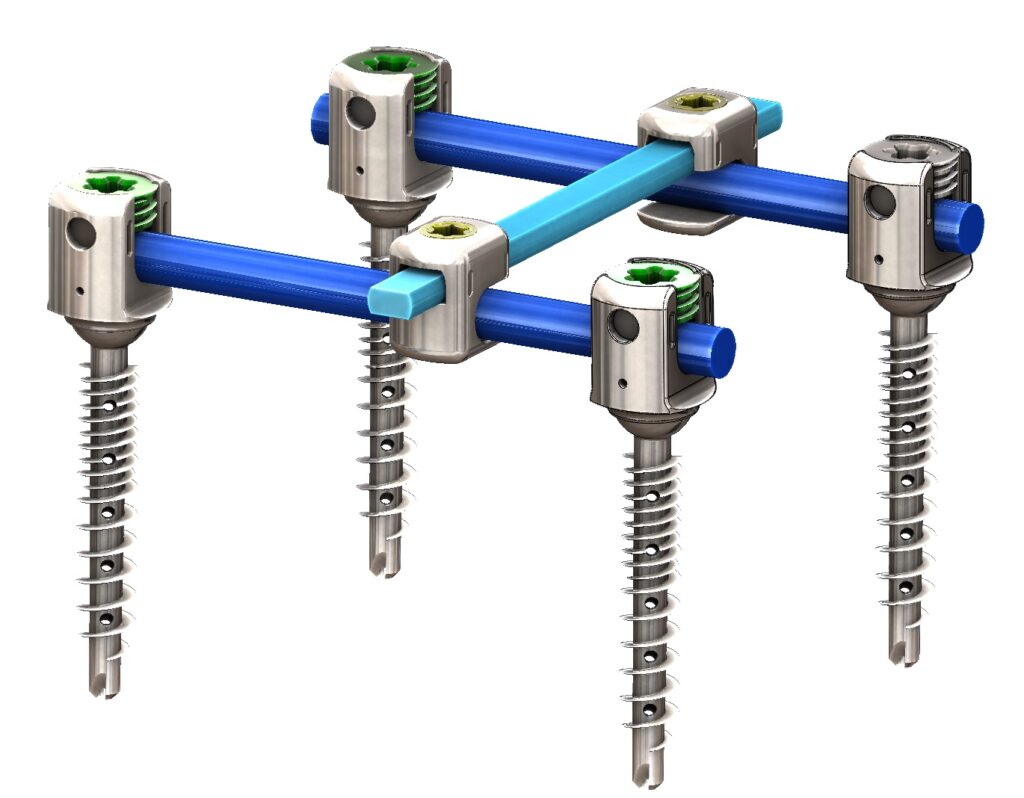
Radical screw is intended to create rigid bone union between Vertebral segments in the lumbar & Lower thoracic vertebrae using the well proven pedicle screw & rod construction system. The parallel shank Radical screw with lateral ports is recommended for primary surgery also including patients with poor quality bone and/or poor bone density issues e.g., osteoporotic or osteopenic bone types;
Revision surgery:
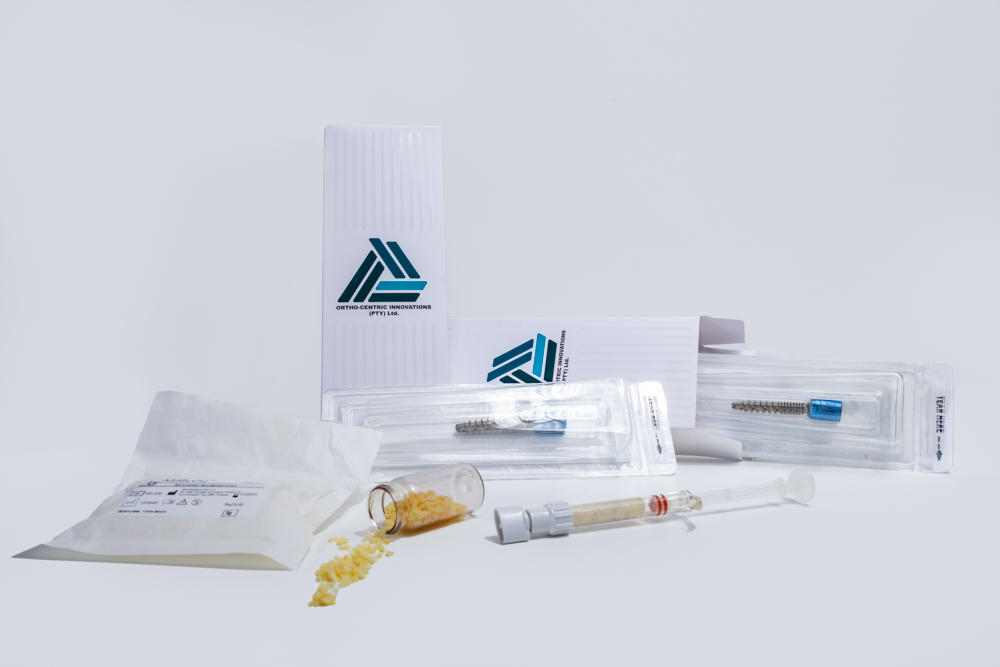
The cannulated & tapered shank version of the Radical™ Pedicle screw is designed with lateral ports which permits BMP paste, collagen and/or blood/bone paste to be injected into the cannulated screw and via the lateral ports into the adjacent trabecula of the vertebral body. The tapered shank is recommended for revision surgery in combination with with the Altis Biologic’s BMP type Bone Chips (Granules 2mm – 5mm), which are intended to fill the void with granules. The tapered stem is intended to compress the granules into the adjacent osteoporotic bone voids
The Radical™ Pedicle screw system is the culmination of partnerships between Surgeons, Engineers and Scientists and dialogue with leading International experts in the field of corrective Spinal Surgery.
A – The logic & reason for this Radical™ screw thread design is a serious effort to reduce the current rate of post-op Pedicle screw loosening in Spinal surgery patients.
The Radical™ Pedicle Screw finds it’s uniqueness and novel features in the unique thread design coupled to the many post-op stability features incorporated in the design listed below:
Important features of this screw design as follows:
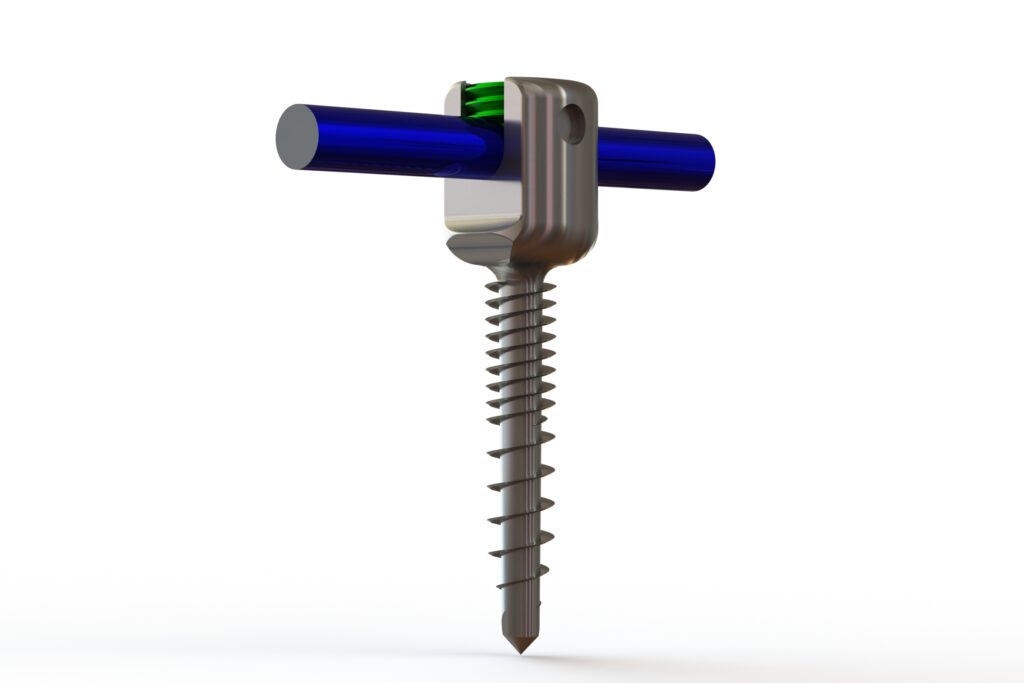
- Surface area is increased by implementing the unique screw thread design, which adds to the bone contact area thereby improving bony on-growth & long-term stability. Conventional pedicle screw designs have an average surface area of *approximately 950sq mm compared with the surface area of the Radical™ Screw being *approximately 1832sq mm. *Surface area claims are obviously subject to similar length screws being tested in this comparison model;
- In the SA markets, Bone supplement injection of BMP’s in various formats from Altis Biologics represents a feature which presents itself as an additional method of screw stability by encouraging healthy bone growth post-op;
- Modular head (tulip) features itself as a method of satisfying those Surgeons or companies that have a preferred opinion of raw material types eg., 6Al4v Titanium alloy, CoCr tulip including CoCr alignment rods;
B – The lateral ports located along the length of the Radical™ Screw engage with the central cannulation of the screw to permit injection of bone supplement materials. Depending on Surgeon preference, bone supplements such as BMP’s, crushed bone mixed blood or collagen. Injection of Low temperature setting acrylic bone cement can add early fixation of the screw – specifically for patients with severe Osteoporotic or degenerative bone problems;
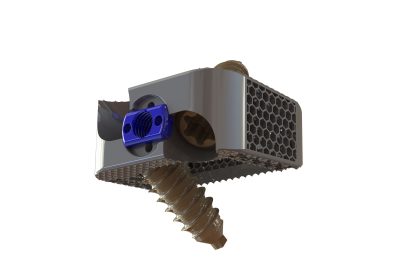
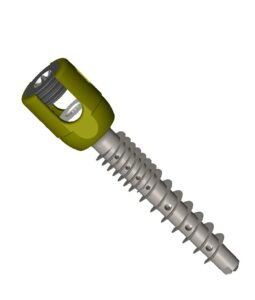
C – Radical™ screw design includes a self-drilling tip at the distal end of the screw for ease of insertion. The design of this self-drilling tip is based upon the “centre drill” philosophy commonly used by manufacturing engineers in the manufacture of engineering components;
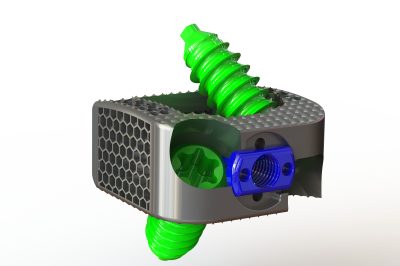
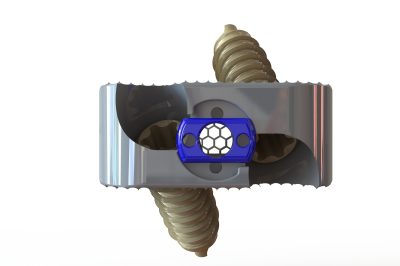
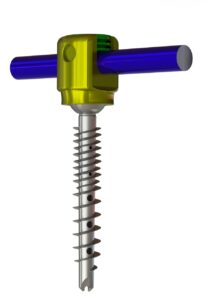
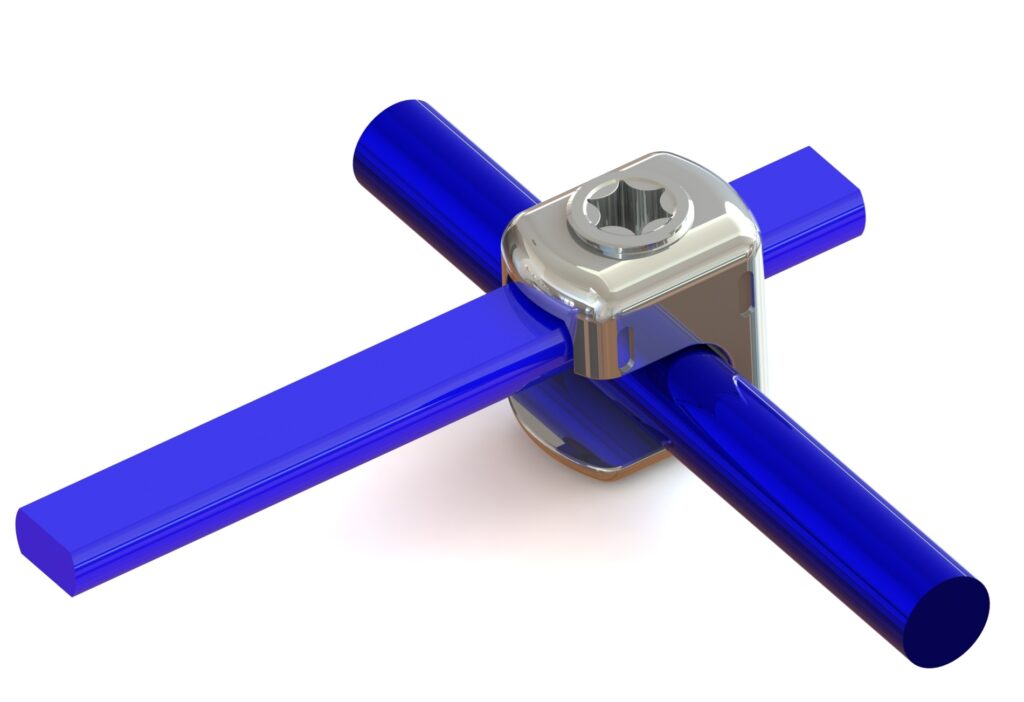
D – The Pedicle Screw head design shown in this rendering, is that of the FDA approved design utilized in the manufacture of successful Pedicle screws. A similar head/tulip design is intended for use with the mono-block (non-swivel head) design of the Radical Screw.
The rod fastening grub screw has the approved “torque“ driver design with a zero-degree buttress thread for improved resistance to shear;
Summary:
A wide range of implants available to address a variety of Spinal problems viz.:
- solid pedicle screw (non-cannulated) with improved surface area and very coarse cancellous type thread has proven to provide superior pull-out test results all in conformance with ASTM standards;
- cannulated pedicle screw with improved surface area and very coarse cancellous thread is specifically designed to address the post-op pedicle screw loosening problem.
This cannulated pedicle screw has lateral ports for the injection of bone bmp type bone supplements and/or acrylic bone cement;
- the radical screw system is produced in both swivel head and fixed head versions for fitting of the 5.5mm alignment rods;
Pull-out Tests:
The pullout tests were conducted in accordance with ASTM F 543-17 “Standard Specifications and Test Methods for Metallic Bone Screws ”.
Two types of test blocks were used during testing. In order to determine the axial tensile force required to remove the screw from a defined material, polyurethane material that complies with ASTM F1839 was used. In order to determine the ultimate tensile strength of the pedicle screw, UHMWPE polyethylene test blocks were used. All sample pedicle screws were tested in the condition as delivered by the client.

Available Sizes:
Size | Description | Multi-Axial Cat No. | Mono-Axial Cat No. |
6.0 x 35mm | Radical Pedicle screw | RS21-0635 | RF21-0635 |
6.0 x 40mm | Radical Pedicle screw | RS21-0640 | RF21-0640 |
6.0 x 45mm | Radical Pedicle screw | RS21-0645 | RF21-0645 |
6.0 x 50mm | Radical Pedicle screw | RS21-0650 | RF21-0650 |
6.0 x 55mm | Radical Pedicle screw | TS21-0655 | RF21-0655 |
| 6mm screws available on special request only |
|
|
7.0 x 35mm | Radical Pedicle screw | RS21-0735 | RF21-0735 |
7.0 x 40mm | Radical Pedicle screw | RS21-0740 | RF21-0740 |
7.0 x 45mm | Radical Pedicle screw | RS21-0745 | RF21-0745 |
7.0 x 50mm | Radical Pedicle screw | RS21-0750 | RF21-0750 |
7.0 x 55mm | Radical Pedicle screw | TS21-0755 | RF21-0755 |
|
|
|
|
8.0 x 35mm | Radical Pedicle screw | RS21-0835 | RF21-0835 |
8.0 x 40mm | Radical Pedicle screw | RS21-0840 | RF21-0840 |
8.0 x 45mm | Radical Pedicle screw | RS21-0845 | RF21-0845 |
8.0 x 50mm | Radical Pedicle screw | RS21-0850 | RF21-0850 |
8.0 x 55mm | Radical Pedicle screw | TS21-0855 | RF21-0855 |